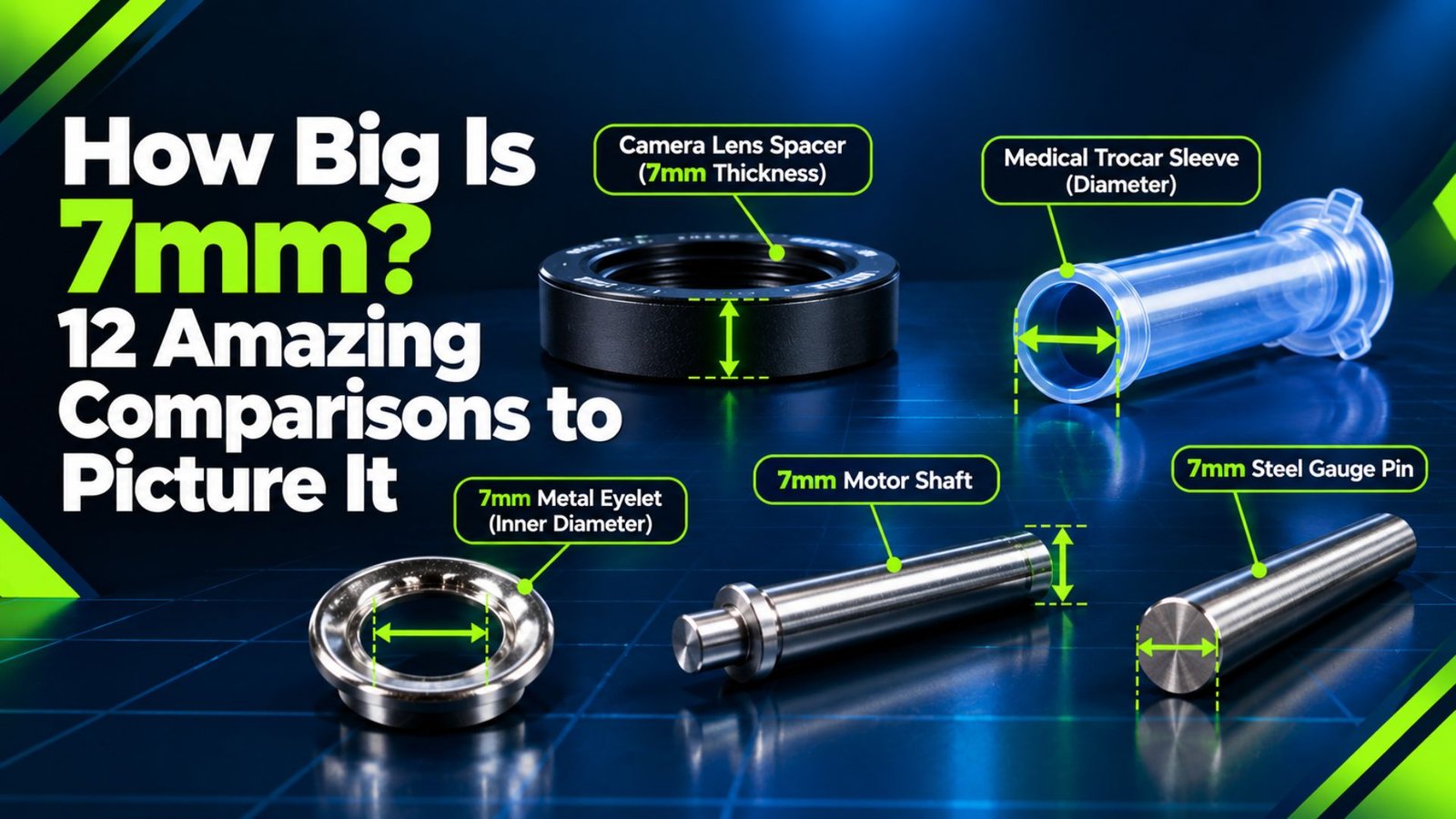
How Big Is 7mm? 12 Amazing Comparisons to Picture It
Have you ever wondered just how small 7 mm really is? In this article, we’ll explore how big is 7 mm through 12 vivid comparisons that will not only help you visualize this measurement but also illustrate its importance in everyday contexts.
Whether you’re working on a DIY project or just curious about its dimensions, you’ll see that understanding how to convert 7 mm in inches can really enhance your comprehension of scale.
From reading 7mm on a ruler to applying dimensional analysis, you’ll find that learning about 7 mm can be surprisingly engaging and practical.
How Big Is 7mm
7 mm is smaller than a penny yet big enough to make a significant difference in design and function. 7 mm = 0.7 cm = ~0.28 inches, (0.276 inches).
This might not seem significant at first, but understanding this measurement can be quite handy. For instance, 7 mm is the diameter of a typical pencil lead, giving you an idea of how it fits into everyday objects that we often overlook.
If you’re ever curious to convert millimeters (mm) to inches, remember the conversion factor: 1 inch equals 25.4 millimeters. To convert 7 mm into inches, you simply divide it by 25.4, leading you to that 0.28-inch number.
7 mm is just under ¼ inch, making it a small measurement that’s easier to picture how long is 7 mm with familiar objects.
7mm Conversion Chart
| Unit | Conversion |
|---|---|
| Centimeters | 0.7 cm |
| Feet | 0.02297 ft |
| Inches | 0.2756 in |
| Meters | 0.007 m |
| Micrometers | 7,000 µm |
| Yards | 0.00766 yd |
What Size Does 7mm Look Like?
When trying to visualize what does 7mm looks like, it’s helpful to compare it to items you encounter daily. At about 0.28 inches, 7mm is slightly larger than a quarter of an inch, which is 6.35mm.
To picture 7mm, Imagine the thickness of a standard wood pencil or a blueberry that is about the same thickness, that’s a great way to conceptualize 7mm. Additionally, if you were to take a standard credit card, 7mm would be roughly one-eighth of its width.
These everyday objects not only help you see the size but also make it clear that while 7mm might seem small, it plays a significant role in various applications, from crafts to precise engineering tasks.
12 Real-Life Objects That Are About 7mm
The measurements below come from manufacturer specifications, ISO standards, or industry measurements, so you can use them as reliable references for understanding 7mm.
7mm Steel Gauge Pin
the 7mm Steel Gauge Pin stands out as exact for 7mm. This an essential tool for those who demand accuracy when it comes to precision engineering.
Manufactured to precise diameters according to the ISO 1938 Standard, this pin offers a pure reference for the 7mm size, eliminating any guesswork.
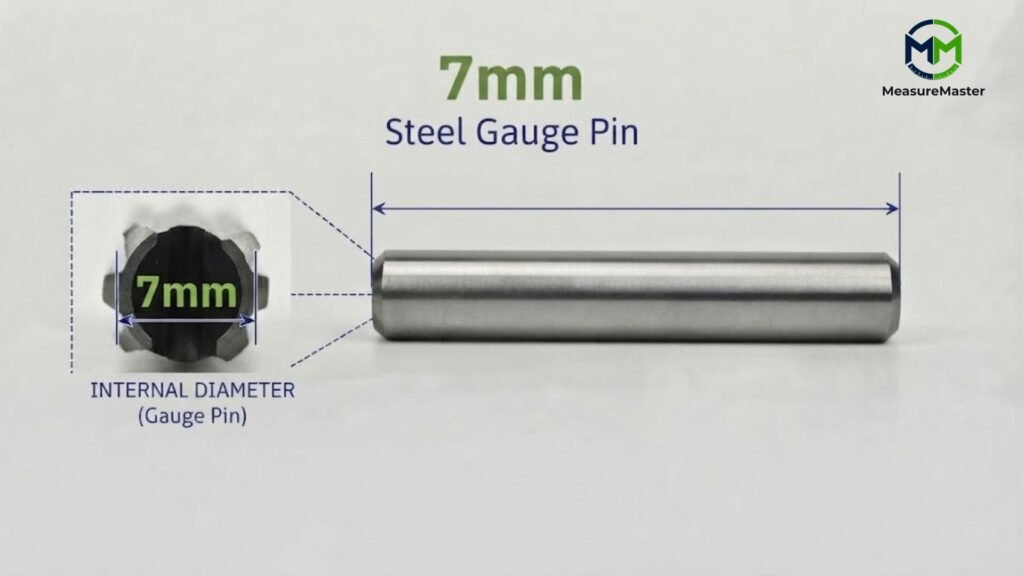
Its perfectly crafted dimensions ensure that it has no visible imperfections, making it ideal for quality control labs where consistency is key.
Fiber Optic Ferrule (7mm Outer Diameter)
The 7mm Fiber Optic Ferrule is a fascinating component that plays a pivotal role in the performance of fiber optic connectors. With a defined outer diameter of 7mm, it’s a standard found in telecom connector assemblies, ensuring seamless optical connectivity.
This helps visualize what 7mm looks like in electronics, showcasing its significance in a world where precision matters greatly. It’s like the well-designed key to a sophisticated lock, vital for transmitting data at incredible speeds.
Medical Trocar Sleeve (Diameter)
The medical trocar sleeve (diameter) are designed in fixed diameters such as the widely used 7mm. These trocar sleeves, often found in surgical environments, plays a crucial role in ensuring efficiency and precision.
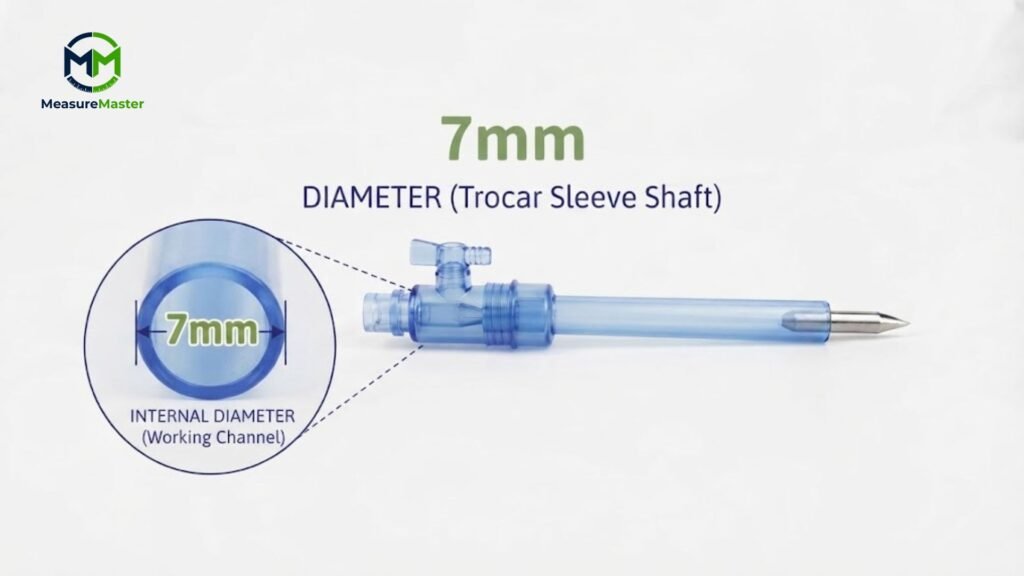
While this may seem like a standard sizing, the magic lies in how these compact tools harmonize functionality with ease of use.
The 7mm diameter standard strikes that perfect balance between being unobtrusive yet sturdy.
Laboratory Glass Tube (7mm Outer Diameter)
A laboratory glass tube with a 7 mm outer diameter gives you a precise, real-world example of what 7 mm looks like. Instead of imagining the measurement as just a number, picture the tube from end-on, the full outside width across the circular tube is 7 mm.
It’s a useful reference because the dimension is specific and measurable, showing how a small 7 mm size can be used in real laboratory equipment where accurate dimensions matter.
When you hold one in your hand, the thin cylinder feels fragile, yet it represents a meticulous engineering marvel designed for specific applications in chemistry labs and research settings.
These tubes are not just random pieces of lab equipment, they are manufactured with exact outer diameters, ensuring that each tube performs consistently in experiments where accuracy is paramount. The 7mm size provides a clean example of how how long is 7 mm.
7mm-Reamer Tool (Diameter)
A 7 mm reamer is a precision cutting tool designed to finish a hole to a specific 7 mm diameter. Its narrow, cylindrical shape gives you a clear physical reference for how small 7 mm really is.
The important part for visualizing the measurement is the tool’s diameter, looking straight across the cutting end, the width measures 7 mm.
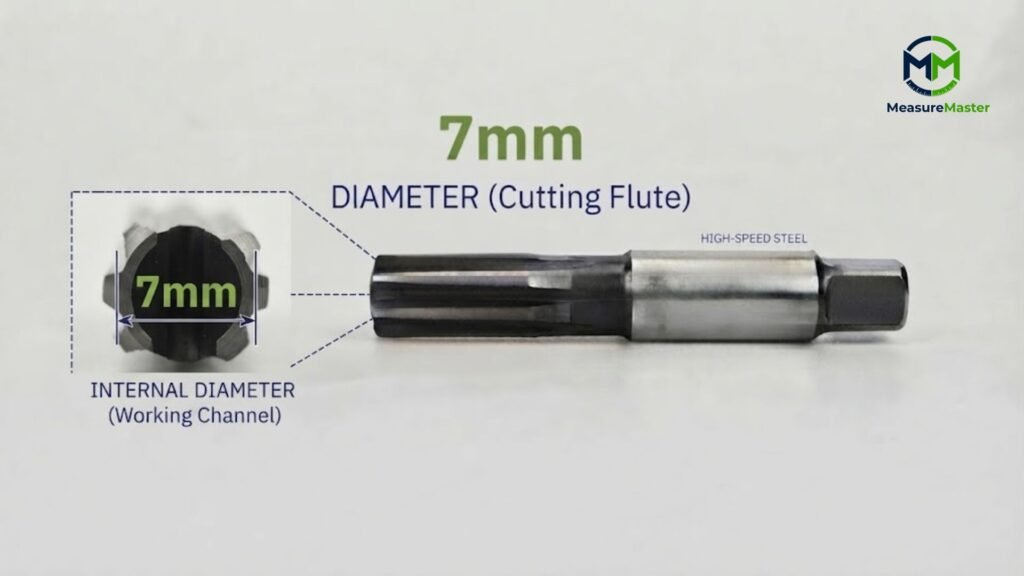
It’s a practical example of how this small measurement is used when accurate hole sizes matter in machining and metalwork.
Motor Shaft (Diameter)
A motor shaft with a 7 mm diameter is another precise way to visualize the size. It is a narrow, solid metal rod, and when you measure straight across its circular end, the distance is exactly 7 mm.
Because motor shafts are made in specific diameters for different machines and devices, a 7 mm shaft gives you a clear example of how small this measurement can be in real life. Looking at the end of the shaft, its width provides a simple visual reference for 7 mm.
In a world that increasingly values efficiency and precision, the humble motor shaft stands as a testament to the artistry of mechanical design, proving that even the smallest components can have a monumental impact on performance.
Camera Lens Spacer (7mm Thickness)
A circular camera lens spacer with a precise thickness of 7 mm. Although it is a small measurement, the spacer provides a useful physical reference for understanding what 7 mm looks and feels like in real life.
A 7 mm thickness means the distance from one flat surface of the spacer to the opposite surface is exactly 7 mm, or 0.7 cm. When viewed against a metric ruler, it corresponds to seven 1-mm increments.
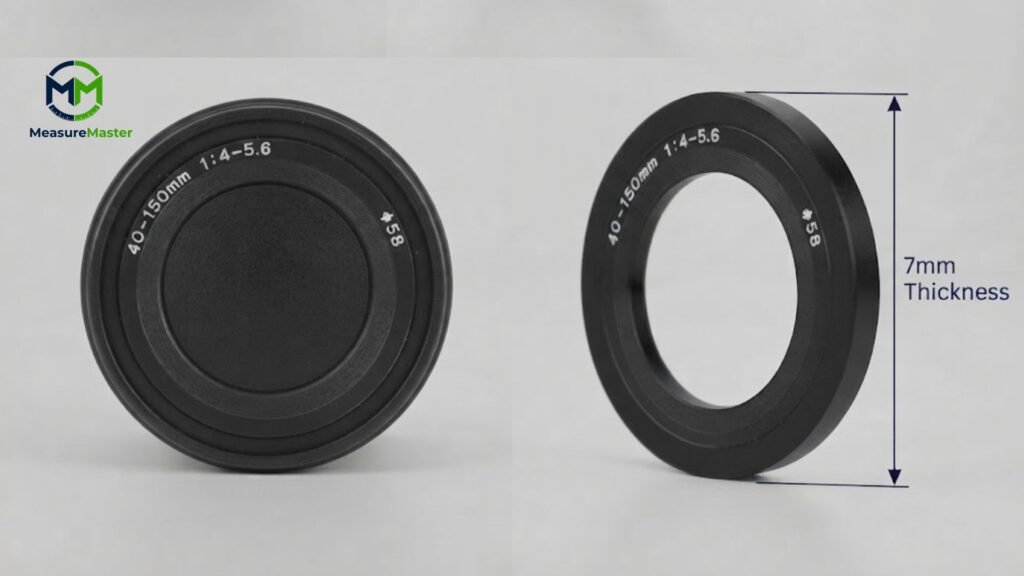
This makes a 7 mm lens spacer a practical reference object when estimating or comparing the thickness of another item.
Fuel Injector Nozzle (Opening Diameter)
A fuel injector nozzle opening with a 7 mm diameter can serve as a useful physical reference for visualizing the size of 7 mm.
The opening is a small circular feature, making it easy to understand the scale when compared with a ruler or another familiar object.
A circular opening measuring 7 mm across would span seven individual 1 mm markings on a metric ruler. The important point is that the 7 mm refers to the diameter of the opening, from one side of the circle directly across to the other side.
7mm Metal Eyelet (Inner Diameter)
A 7 mm metal eyelet with a 7 mm inner diameter provides another practical way to visualize the size of 7 mm. The measurement is taken across the inside of the eyelet, from one inner edge straight across to the opposite inner edge.
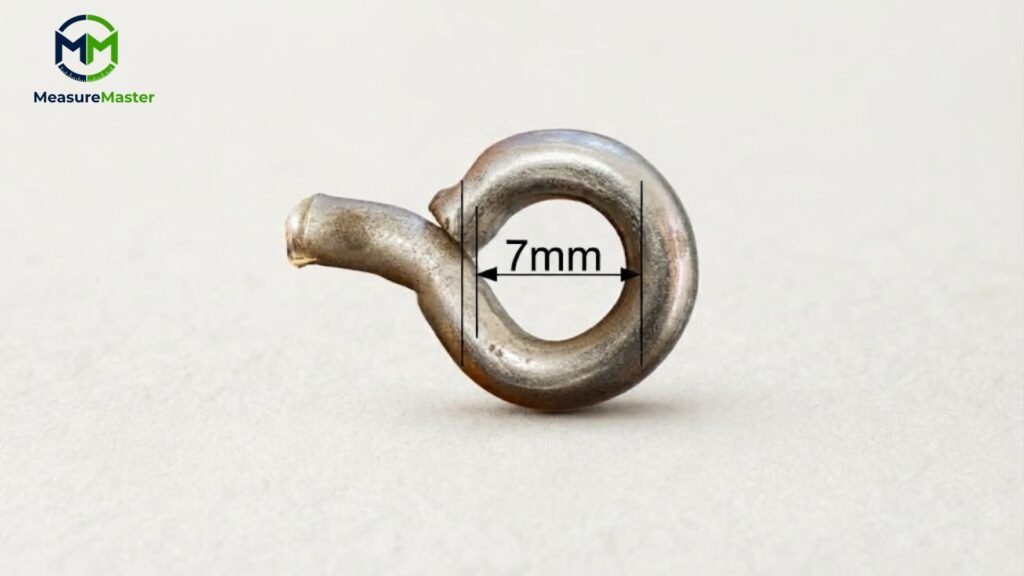
Since 7 mm equals 0.7 cm, the opening represents a diameter slightly smaller than 1 cm. This makes a 7 mm eyelet a convenient real-world reference for comparing other small circular openings or objects.
7mm Craft Rhinestone
A 7 mm craft rhinestone can also be used as a simple physical reference for visualizing 7 mm. If the rhinestone is specified as 7 mm in diameter, its overall width across the widest point is approximately 7 mm.
This makes them versatile for various applications, whether you’re jazzing up a piece of jewelry or adding a touch of glam to clothing and accessories.
This provides an easy way to picture the measurement: when comparing another small object with the rhinestone, an object that has approximately the same width would give you a rough visual reference for what 7 mm looks like.
7mm of a Standard Drinking Straw
A drinking straw can also give you a familiar reference for 7 mm. One documented drinking-straw design specifies an outer diameter of approximately 7 mm, meaning the straw measures about 7 mm across from one outside edge to the other.
Think of looking straight at the end of the straw rather than measuring its length. The circular opening and surrounding wall give you a quick visual sense of how wide 7 mm is.
Because straw diameters vary by design, this should be treated as an approximately 7 mm reference, not a universal straw measurement.
7mm Pearl
A 7 mm pearl is another easy way to visualize this measurement. Pearl size is normally given by its diameter, measured across the widest point, so a pearl listed as 7 mm represents a diameter of about 7 mm.
That makes a 7 mm pearl a useful visual reference because it is small enough to sit comfortably on a fingertip but large enough to see clearly. Pearls in the 6–8 mm range are also commonly used in everyday jewelry, making this a familiar comparison for readers who have seen pearl earrings or necklaces.
How Big Is 7mm on a Ruler?
If you have a metric ruler, look between the 0 mark and the 1 cm mark. This distance contains 10 small millimeter divisions, with each small tick representing 1 mm.
Count seven small ticks from zero, and the seventh tick is exactly 7 mm. This is the easiest way to see exactly how long 7 mm is and train your eye to recognize the measurement.
Once you have checked 7 mm on a ruler, you can use that visual distance as a reference when estimating the size of small objects without a measuring tool.
Where Is 7mm Commonly Used?
A 7 mm measurement shows up in many small parts and products where a precise size matters. You may come across it in tools, mechanical parts, jewelry, craft materials, tubing, and small household components.
In everyday life, you may encounter 7 mm when working with small hardware, crafting supplies, jewelry, or DIY projects. Knowing that 7 mm is equal to 0.7 cm or about 0.276 inches makes it easier to recognize the size when you don’t have a ruler nearby.
You May Also Read: How Much Is 10 Grams? 15 Useful Things That Weigh 10g
Conclusion
In summary, understanding how big is 7mm truly, can be quite eye-opening when you see it compared to everyday objects. The actual purpose or function of these objects is for the comparison.
The useful part is their 7 mm measurement, which gives you a tangible reference for understanding the scale of 7 mm. Whether it’s the width of a standard pencil lead or the thickness of a typical credit card, these visual comparisons help to ground the size in our minds.
These comparisons not only help us grasp the size but also remind us of the intricacies of measurement accuracy in different fields.
FAQs
How Big Is 7mm in Inches?
7 mm is equal to 0.2756 inches, which rounds to about 0.28 inches. That makes 7 mm slightly larger than ¼ inch. 7 mm is about the width of a small craft stone or the diameter of a 7 mm pearl.
Is 7 mm the size of a pea?
Not exactly. A specific small pea may be close pea sizes naturally vary. A typical pea is usually larger then 7 mm, A small pea is a close size to 7mm, but pea sizes naturally vary.
How Long Is 7 mm?
7 mm is 0.7 cm or about 0.28 inches. For a quick real-life reference, it is about the diameter of a small pencil eraser, a tiny distance you can picture on a ruler.